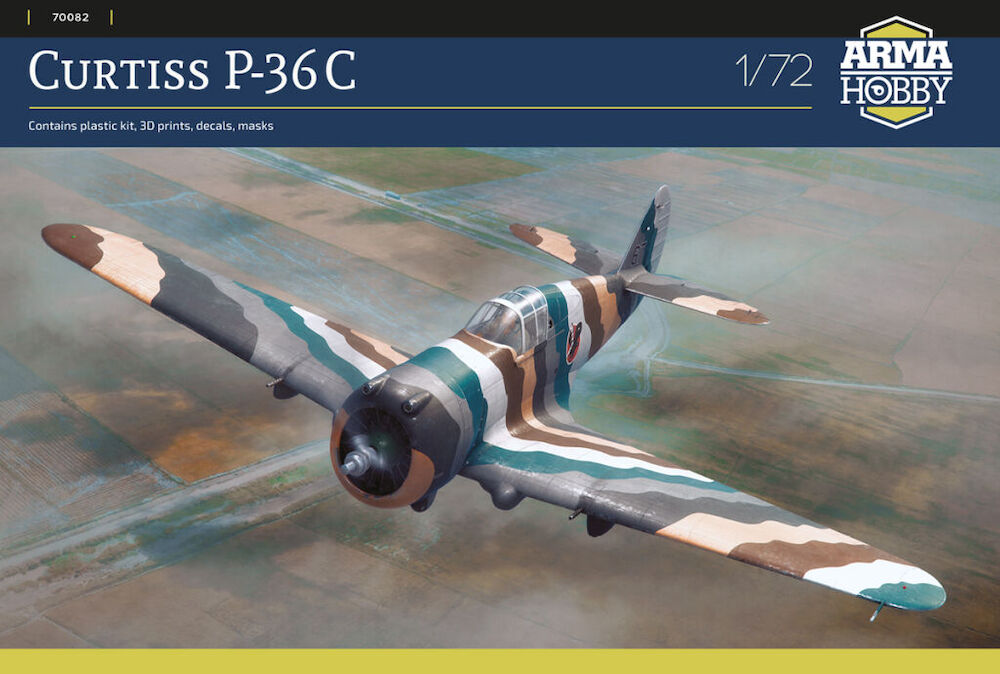
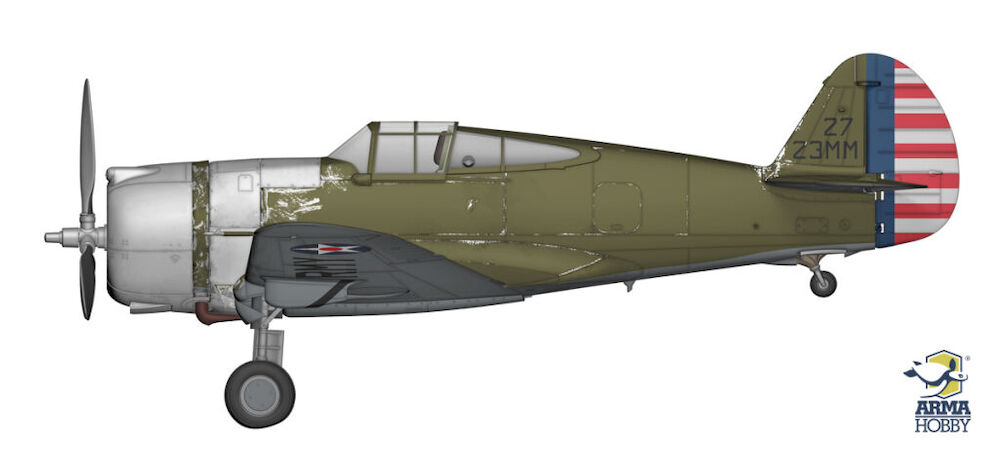
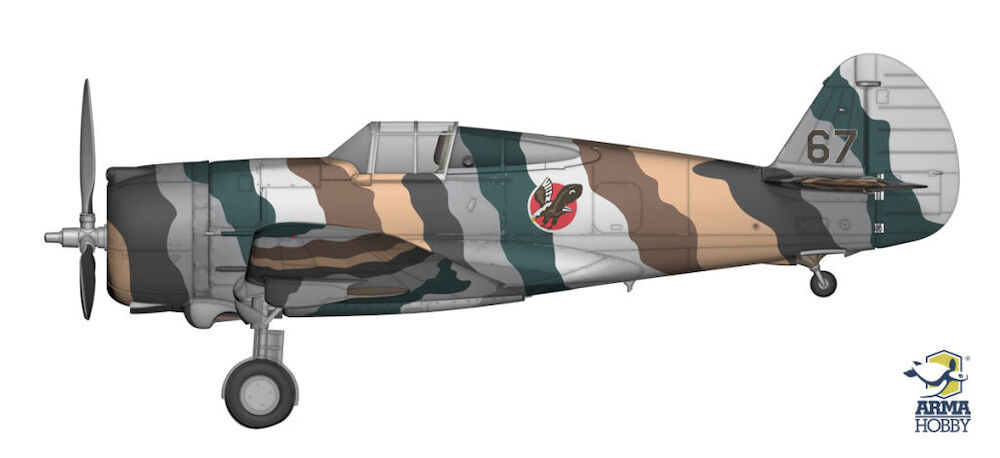
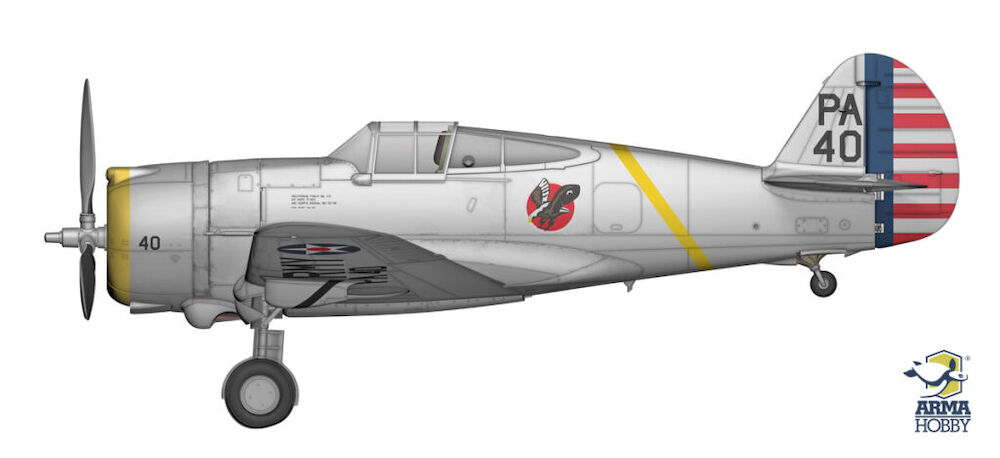
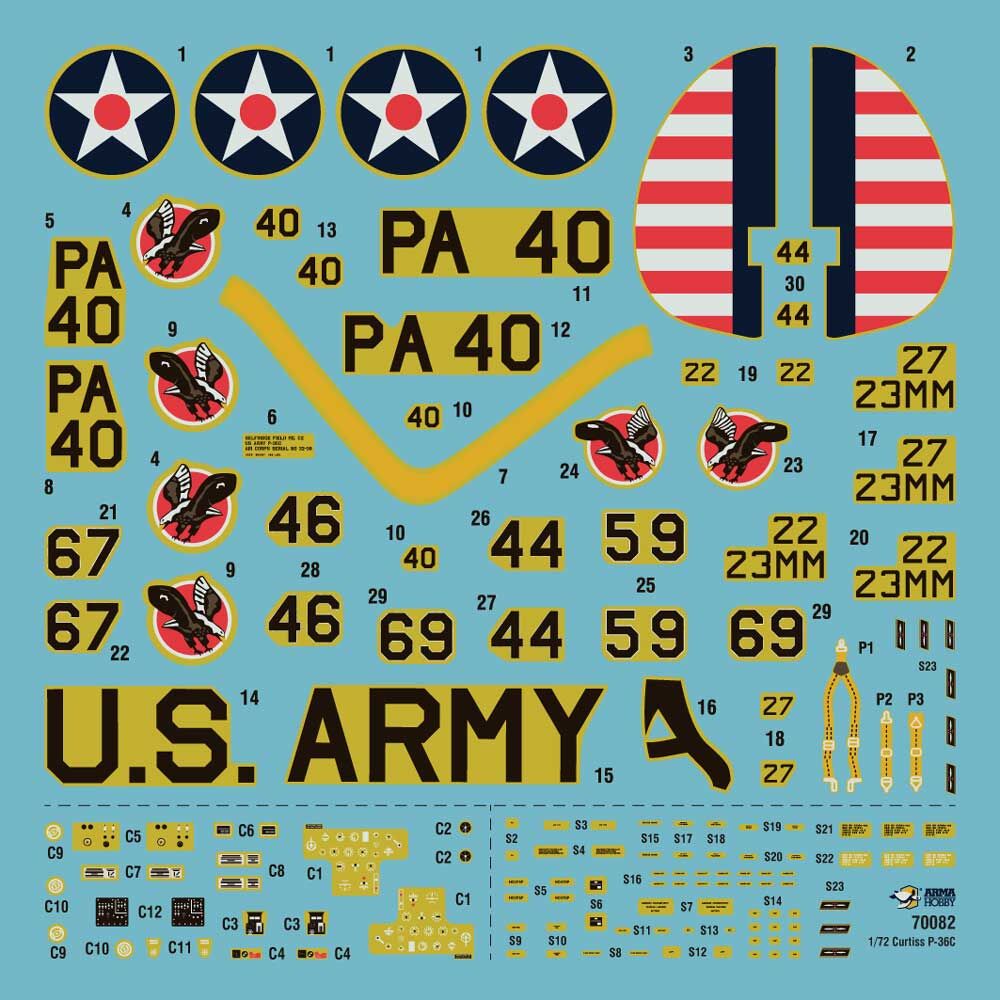
Curtiss P36C Hawk
Product code 70082
Curtiss
Provisional price
subject to change
Scale 1 : 72
Publisher/Brand Arma Hobby
Category Scale Modelling Kits
Subcategory Scale Modelling Kits
Availability Expected.
Click here to be notified when this product becomes available
This product was added to our database on Thursday 6 August 2026.
Your reliable Aircraft Modelling Source since 1989
Curtiss Hawk 81-A2 is one of the most iconic early variants of the Curtiss P-40 fighter, forever associated with the American Volunteer Group (AVG), better known as the Flying Tigers. Its distinctive shark mouth nose art, combat over China, and the innovative tactics developed by General Claire Lee Chennault made the Hawk 81-A2 one of the most recognizable Allied fighters of the early Pacific War.
This Arma Hobby kit represents the export Hawk 81-A2 flown by the AVG in China during 1941–1942. These aircraft wore camouflage based on British Air Ministry specifications, applied using American-made DuPont paints—colours that continue to fascinate aviation historians and scale modellers alike.
Designed for exceptional detail and straightforward assembly, the kit includes all plastic parts on one grey sprue and one clear sprue, which also features the Arma Jig alignment tool to simplify accurate landing gear installation.
Kit Contents
- Plastic parts on one grey sprue
- Clear parts and the Arma Jig alignment tool on one clear sprue
- 3D-printed pilot's seat with moulded harnesses
- Pre-cut painting masks for the canopy and wheels
- High-quality Cartograf decals with three Flying Tigers marking options
- A download code for 3D-printable exhaust stacks, machine gun barrels and gunsights
Following the success of the Curtiss P-36 Hawk series, Arma Hobby proudly introduces the next chapter in this famous family of American fighters. The Curtiss Hawk 81-A2 is the first release in our all-new Curtiss Hawk 81, Tomahawk II and P-40B/C family in 1/72 scale.
Marking Options
Curtiss Hawk 81-A2 P-8109, flown by Charles Older of the 3rd Pursuit Squadron "Hell's Angels", American Volunteer Group (Flying Tigers), China, 1941–1942. Aircraft of one of the AVG's highest-scoring aces during the defence of China.
Curtiss Hawk 81-A2 P-8182, flown by Greg "Pappy" Boyington of the 1st Pursuit Squadron "Adam & Eves", American Volunteer Group (Flying Tigers), China, 1941–1942. The aircraft represents Boyington's service with the AVG before he became the famous commander of the legendary VMF-214 "Black Sheep".
Curtiss Hawk 81-A2 P-8103, flown by Dick Rossi of the 1st Pursuit Squadron "Adam & Eves", American Volunteer Group (Flying Tigers), China, 1941–1942. One of the best-known Flying Tigers aircraft used during the defence of China in the opening months of the Pacific War.
Curtiss Hawk 81-A2 – From the Hawk 75 to the Flying Tigers
The Curtiss Hawk 81 was developed directly from the successful Hawk 75 fighter, known in U.S. Army service as the P-36. Retaining much of its predecessor’s structure while introducing the Allison V-1710 inline engine, it became the first member of the famous P-40 family that would serve on every major front of the Second World War.
The earliest production aircraft entered service with both the U.S. Army Air Corps as the P-40 and the Royal Air Force as the Tomahawk. Aircraft built for British contracts were finished at the Curtiss factory in American-made DuPont paints formulated to match RAF camouflage colours. One hundred of these export fighters, designated Hawk 81-A2, were diverted before delivery and transferred to the American Volunteer Group in China.
Flying from late 1941, the Flying Tigers quickly earned worldwide fame by defending China and the Burma Road against Japanese air attacks. Under Claire Chennault’s leadership, the AVG exploited the Hawk’s speed, rugged construction and heavy armament while avoiding turning combat with more manoeuvrable Japanese fighters.
The unit’s famous shark-mouth nose art, inspired by RAF Tomahawks in North Africa, became one of the best-known aircraft markings of the war. Less familiar, but equally distinctive, were the squadron emblems: Adam and Eve, Hell’s Angels, and the Panda Bears, all complemented by the Disney-designed Flying Tiger insignia.
In July 1942 the AVG was disbanded and replaced by the USAAF’s 23rd Fighter Group. Equipped first with the surviving Hawk 81s and later with new P-40E fighters, it continued the mission in China with many former AVG pilots, preserving both the combat experience and the legend of the Flying Tigers.