Boulton Paul Defiant NF1 (REISSUE)
Product code 05132
Boulton Paul
P.82 Defiant
Scale 1 : 48
Publisher/Brand Airfix
Format approx W 25 x L 22.4 x H 7.2 cm
Category Scale Modelling Kits
Subcategory Scale Modelling Kits
Availability only 1 remaining
This product was added to our database on Thursday 8 January 2026.
Your reliable Aircraft Modelling Source since 1989
Beautiful new kit, many options, canopies, props, exhausts and a highly detailed interior including the pilot!
Markings for:
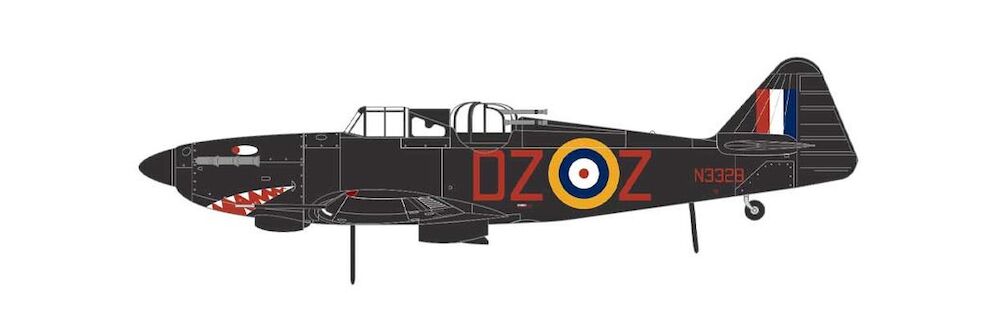
Boulton Paul Defiant NF.I, No. 151 Squadron, Royal Air Force Wittering, Cambridgeshire, England, February 1941.
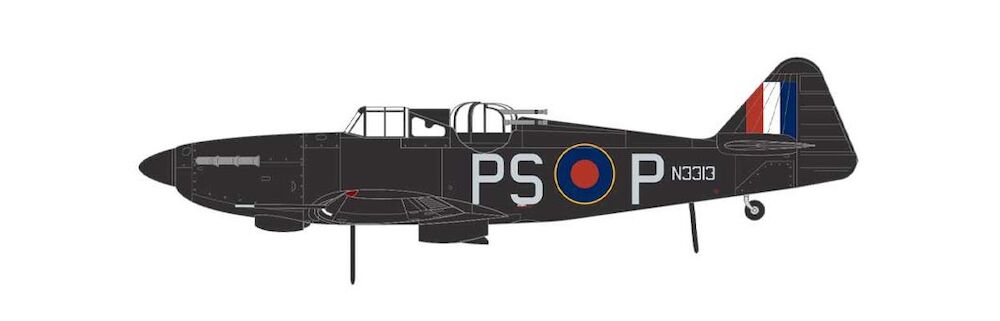
Boulton Paul Defiant NF.I, Aircraft flown by Squadron Leader Philip James Saunders, No.264 Squadron, Royal Air Force Debden and Biggin Hill, England, December 1940/February 1941. (B)
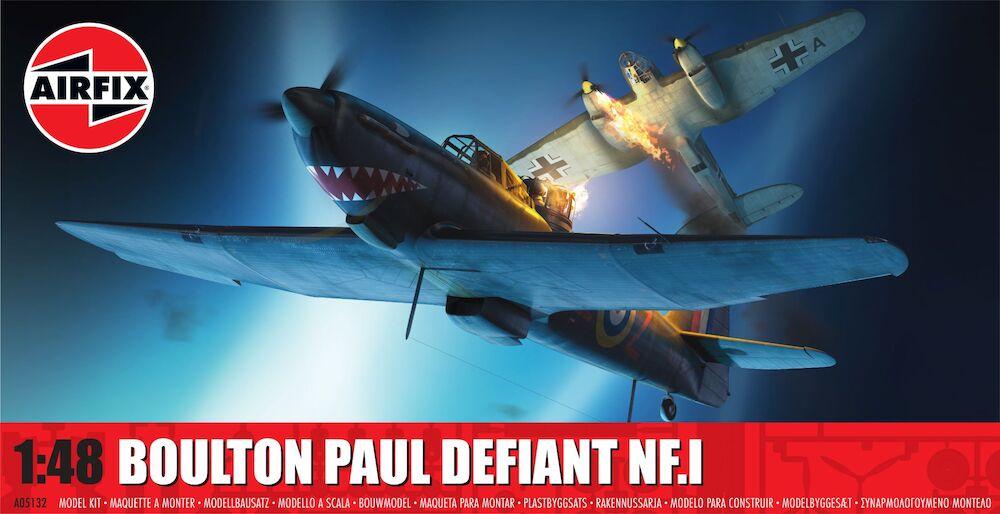
Build this 1:48 scale Boulton Paul Defiant and celebrate one of the greatest nightfighter planes of the Second World War. With 113 parts and two scheme options, this model kit will be a distinctive addition to your display shelf once built.
History
Quickly outclassed as a day fighter during the Battle of Britain, the Boulton Paul Defiant was tasked with protecting Britain from night bombing raids by the Luftwaffe. Not trained to fight at night, Defiant crews had to develop interception techniques as they fought, but found the aircraft much more suited to this nocturnal fighting environment.
After enjoying initial success against Luftwaffe pilots unfamiliar with Britain's turret fighter, Defiant crews soon discovered the limitations of their aircraft.
The significant weight of the gun turret, combined with a relatively poor arc of defensive fire, meant that German Messerschmitts soon learned how to attack these unusual aircraft. As combat losses began to mount, RAF Defiants were relegated to night fighting duties, where the aircraft was much less vulnerable and could make better use of its offensive firepower.
As the night Blitz against London raged, Defiant crews had to develop their own interception techniques, as many were not trained in this type of fighting. They soon began to score victories against the Luftwaffe raiders, helping to establish a cohesive night defence system and rebuilding the reputation of the Defiant.
These all-black nocturnal hunters became some of the most distinctive RAF aircraft of the Second World War.