Hawker Hurricane MKI "Battle of Britain"
Product code 40017
Hawker
Provisional price
subject to change
Scale 1 : 48
Publisher/Brand Arma Hobby
Category Scale Modelling Kits
Subcategory Scale Modelling Kits
Availability Expected.
Click here to be notified when this product becomes available
This product was added to our database on Friday 9 October 2026.
Your reliable Aircraft Modelling Source since 1989
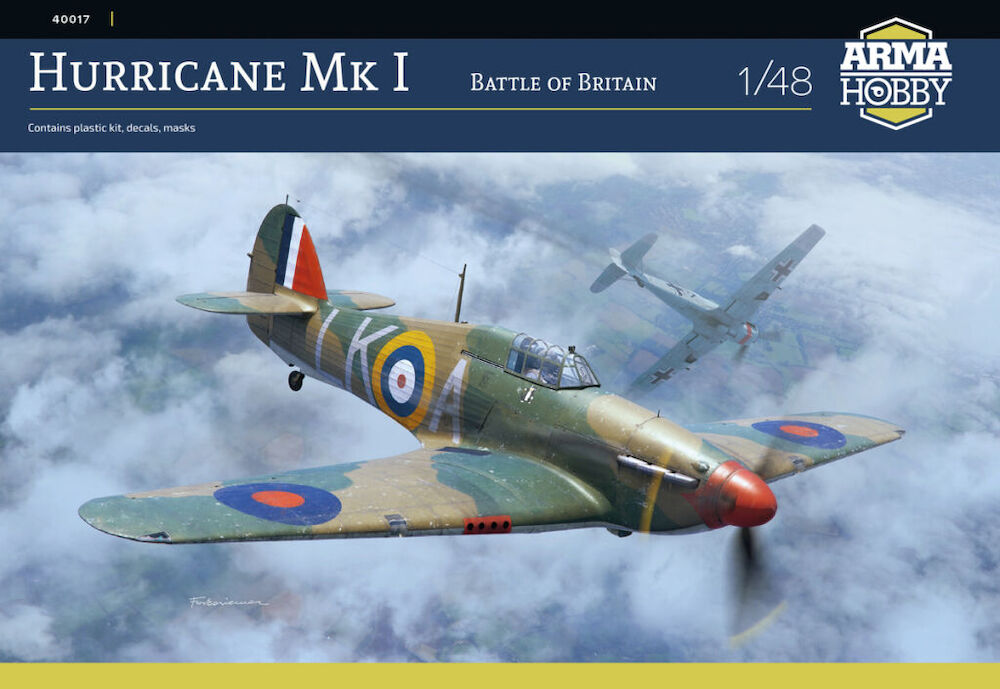
Hurricane Mk I 1/48 – Battle of Britain
In the summer of 1940, the battle fought over southern England stopped the Luftwaffe and frustrated German plans to gain air superiority before an invasion of Britain. Its true workhorse was the Hawker Hurricane – the backbone of RAF Fighter Command.
This kit features three Hurricane Mk Is from the Battle of Britain, flown by three remarkable pilots: fighter ace Ian “Widge” Gleed, Fleet Air Arm pilot Richard “Jimmi” Gardner, and James B. E. Nicolson – the only RAF Fighter Command pilot awarded the Victoria Cross during the Second World War.
What’s in the box?
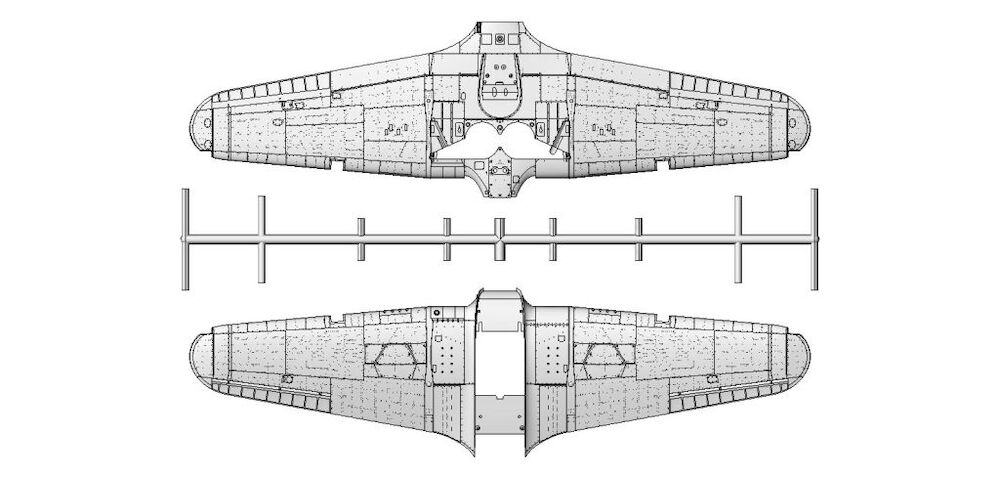
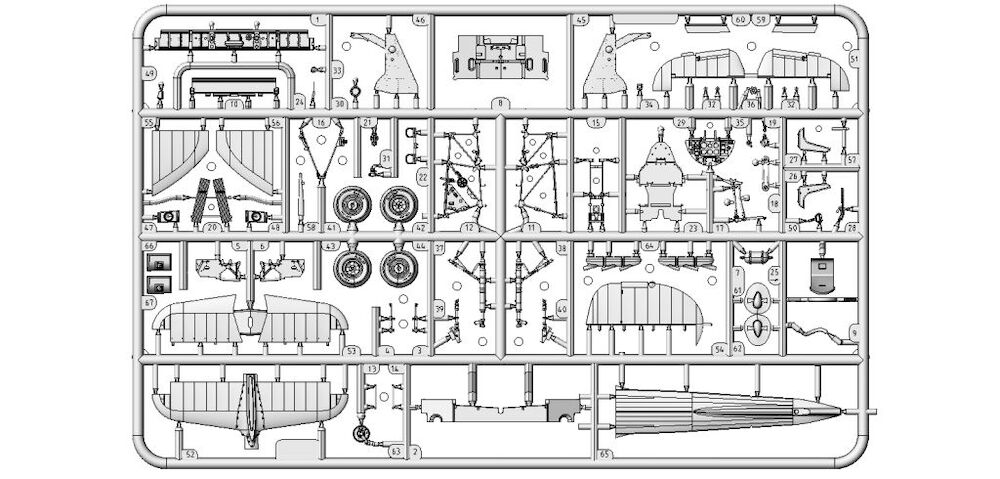
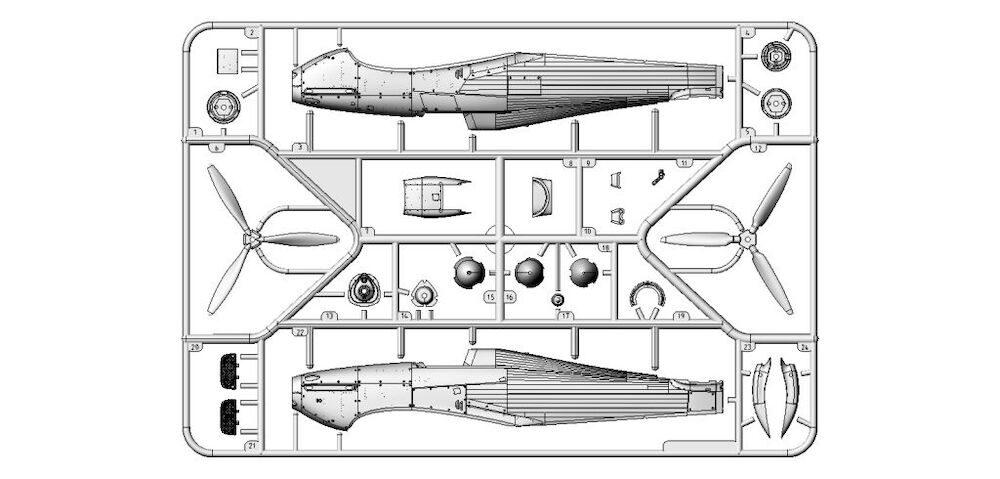
- four plastic sprues (two completely new),
- detailed instructions in Polish and English,
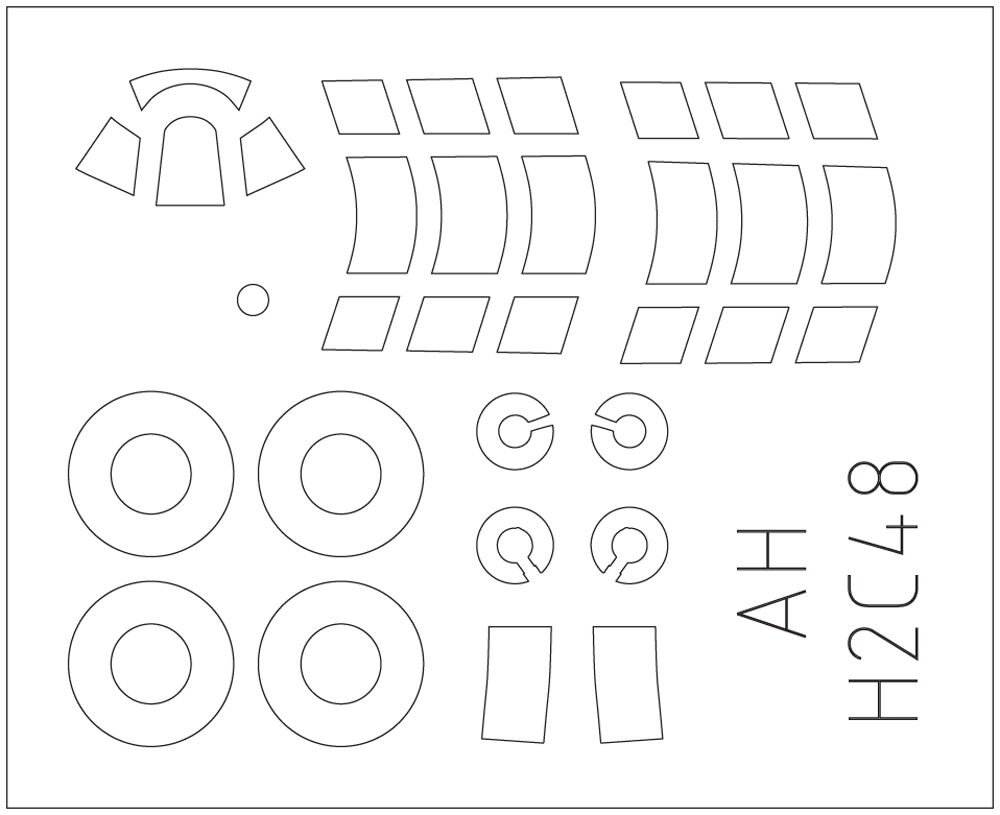
- masks for the canopy and wheels,
- a code to download a 3D-printable accessories file – pilot’s seat with harness and exhaust stacks,
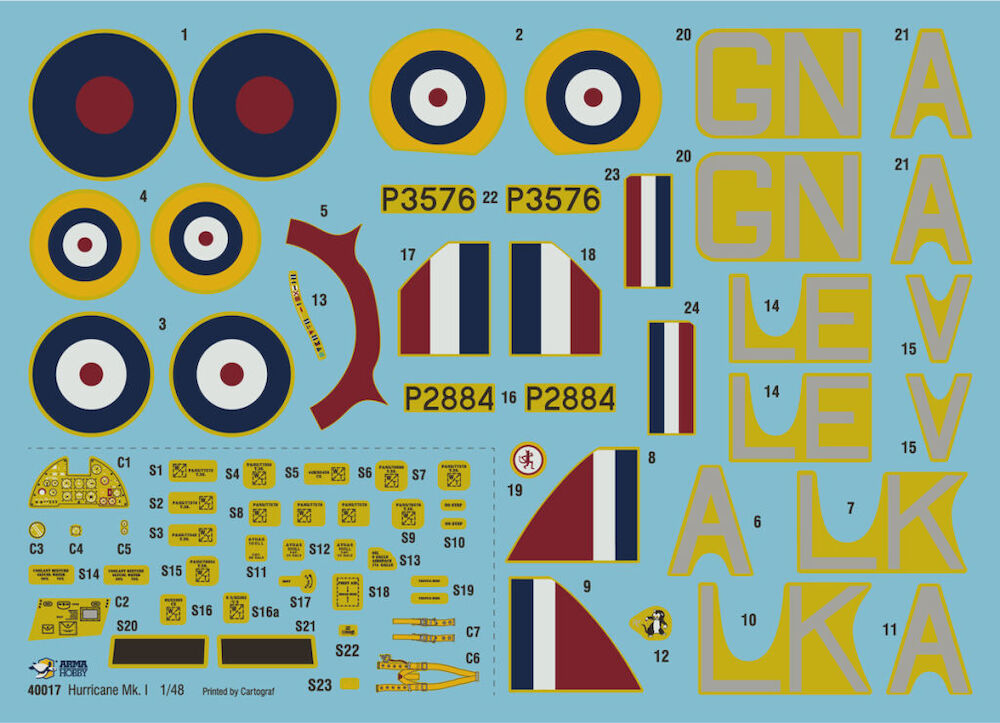
- Cartograf decals with three marking options.
Marking options
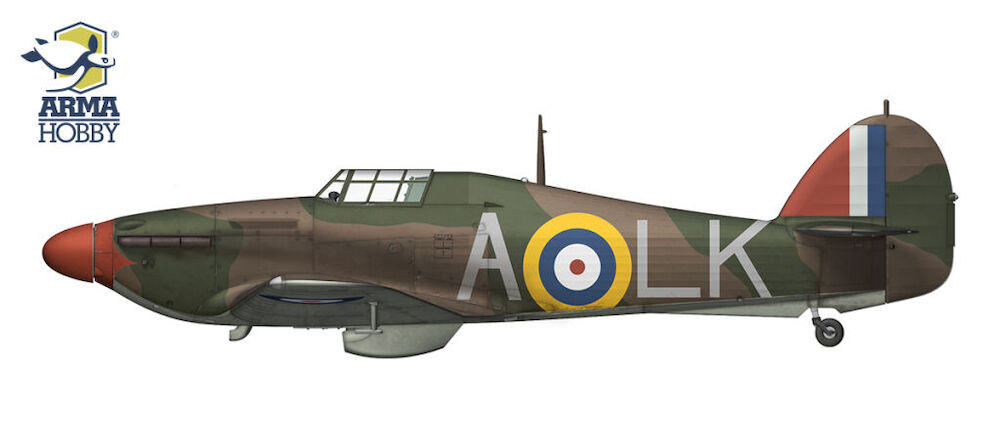
Hurricane Mk I P2798/LK-A – No. 87 Squadron RAF, Exeter, August–September 1940
Flown by F/Lt Ian R. “Widge” Gleed, one of the best-known British fighter aces of the Battle of Britain.
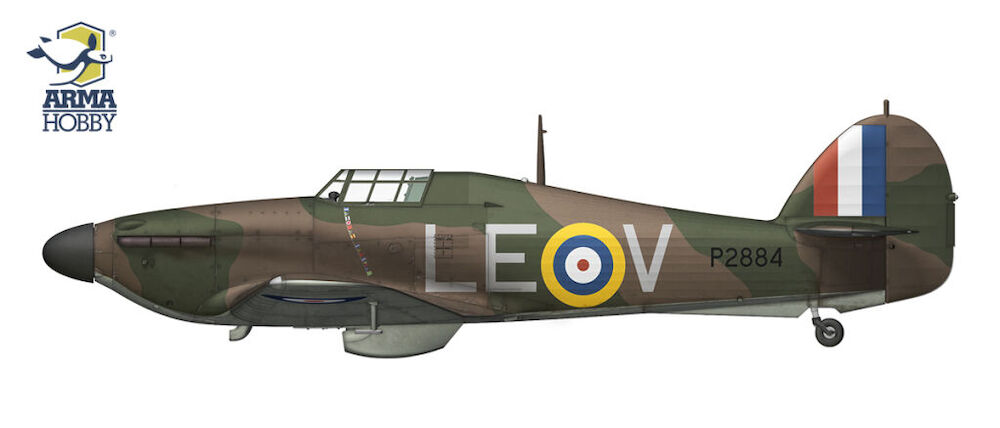
Hurricane Mk I P2884/LE-V – No. 242 Squadron RAF, Coltishall, August 1940
Flown by Sub-Lieutenant Richard E. “Jimmi” Gardner, one of 23 Fleet Air Arm pilots who volunteered to serve with the RAF before the Battle of Britain.
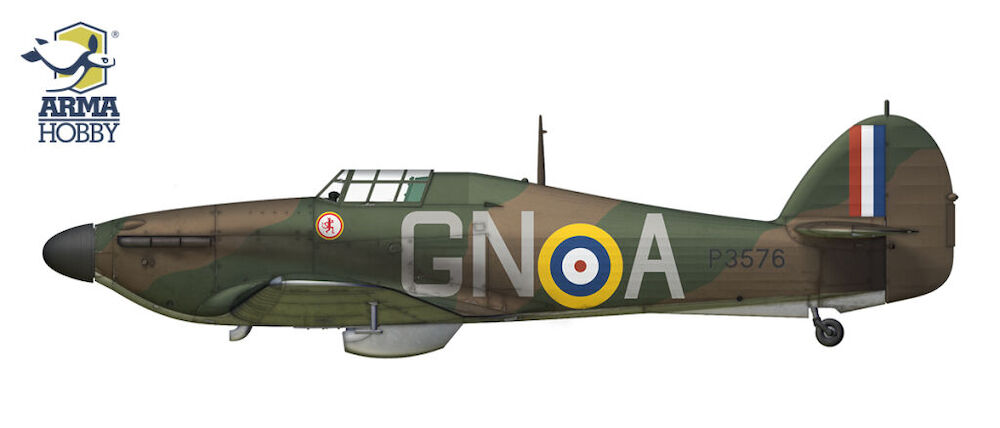
Hurricane Mk I P3576/GN-A – No. 249 Squadron RAF, Boscombe Down, August 1940
Flown by F/Lt James B. E. Nicolson, the only RAF Fighter Command pilot awarded the Victoria Cross during the Second World War.
Hawker Hurricane – Workhorse of the Battle of Britain
The Battle of Britain marked Nazi Germany’s first major military defeat of the Second World War. In the summer of 1940, the Luftwaffe set out to gain air superiority over southern England and the English Channel, a necessary step towards Operation Seelöwe – the planned invasion of Britain. Operation Adler, the great air offensive, was intended to cripple RAF Fighter Command by destroying its aircraft, airfields and supporting infrastructure.
The backbone of Britain’s fighter defence was not the celebrated Spitfire, but the Hawker Hurricane – the true workhorse of Fighter Command. Its design still owed much to an earlier generation of aircraft: a steel-tube fuselage, largely fabric-covered, combined in the later Mk I with modern metal-skinned wings and metal engine cowlings. Yet the Hurricane was powered by the excellent Rolls-Royce Merlin and carried an effective armament of eight Browning machine guns.
It could not match the outright performance of either the Spitfire or the Bf 109E. But it was good enough – and there were enough of them. Hurricane squadrons formed the main fighting force of Britain’s integrated air-defence system, which combined radar, ground observers and centrally controlled fighter interception. They bore much of the numerical burden of weeks of relentless combat.
Fighter Command did not need to destroy the Luftwaffe to win. It needed to survive, remain effective and deny Germany control of the skies until the Luftwaffe could no longer sustain the campaign at the required intensity. The Hurricane played a central part in making that possible.