USS Saratoga (CV-3) : From the 1920s–30s and WWII Combat to Operation Crossroads
Product code 9780764364662
Series Legends of Naval Warfare
Publisher/Brand Schiffer
Author David Doyle
Format 22 x 22 cm
No. Pages 112
Version Hard cover
Language English
Category Aviationbooks
Availability only 4 remaining
This product was added to our database on Friday 12 September 2025.
Your reliable Aviation Book Source since 1989
Also in this series:
| Product | Publisher/Brand | Series/scale | Price € | ||
|---|---|---|---|---|---|
![]() | Kaga and Akagi Aircraft Carriers in the Imperial Japanese Navy | Schiffer | Legends of Naval Warfare | € 33.90 | |
![]() | USS Hornet (CV-8): From the Doolittle Raid and Midway to Santa Cruz | Schiffer | Legends of Naval Warfare | € 21.06 | |
![]() | USS Intrepid (CV-11/CVA-11/CVS-11): From World War II, | Schiffer | Legends of Naval Warfare | € 27.48 | |
![]() | USS Nimitz (CVN-68): America's Supercarrier: 1975 to the Present | Schiffer | Legends of Naval Warfare | € 21.06 | |
![]() | USS Yorktown (CV-10) Essex-Class Carrier in WWII, | Schiffer | Legends of Naval Warfare | € 33.90 |
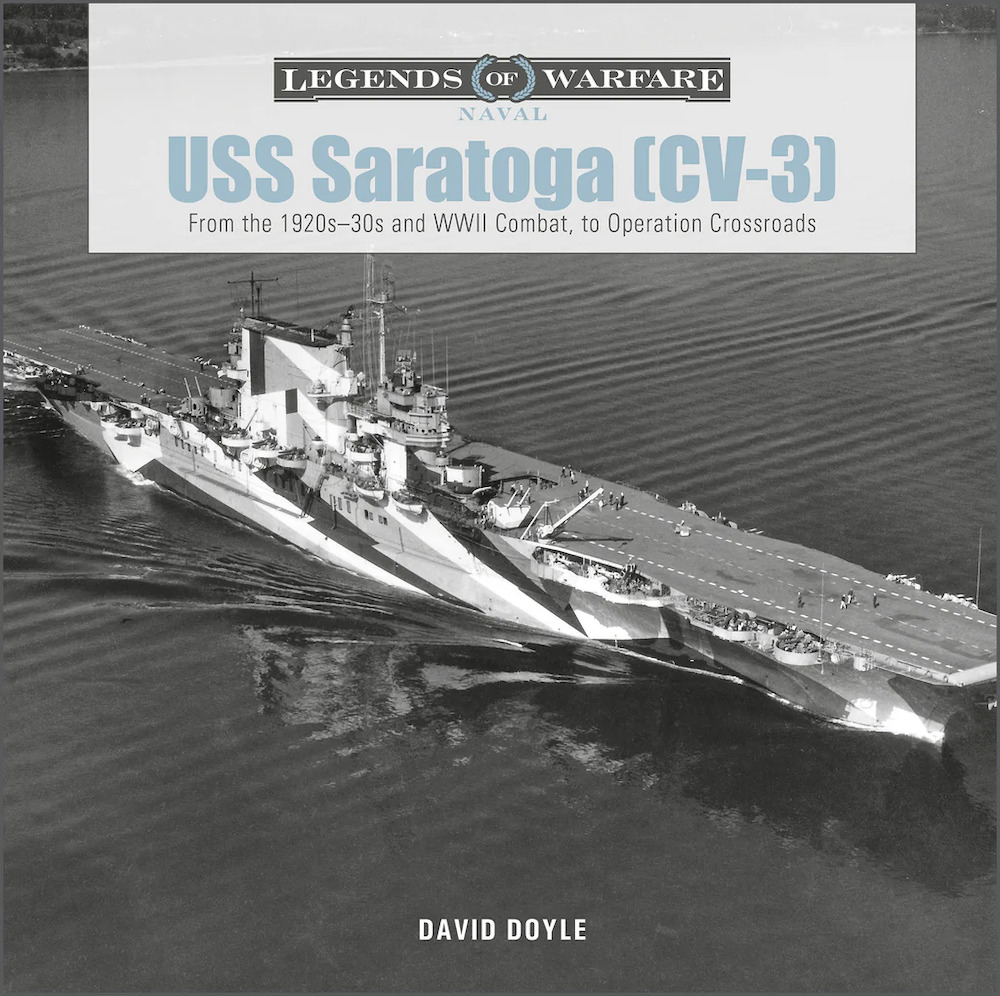
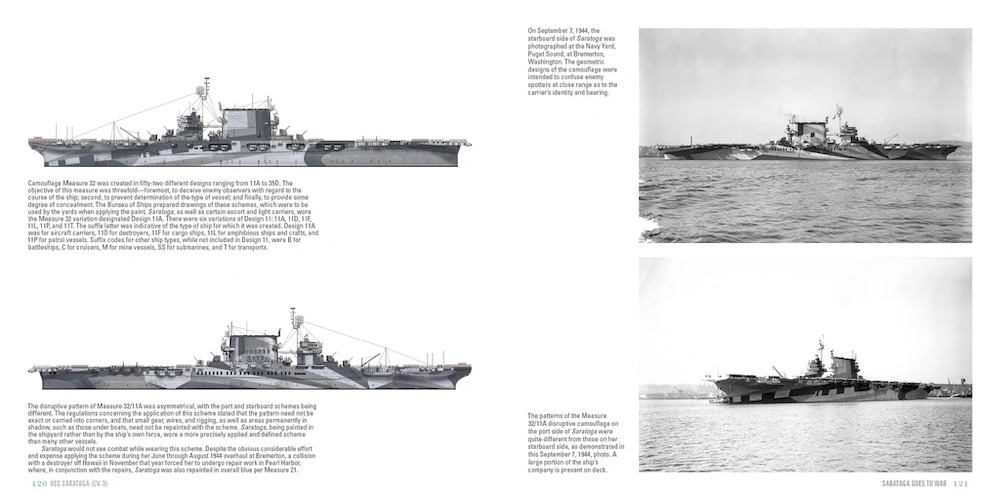
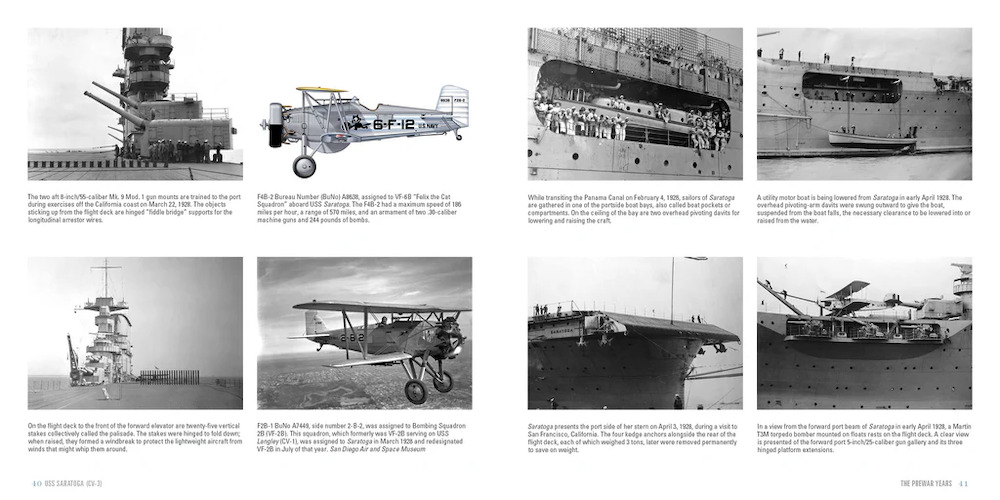
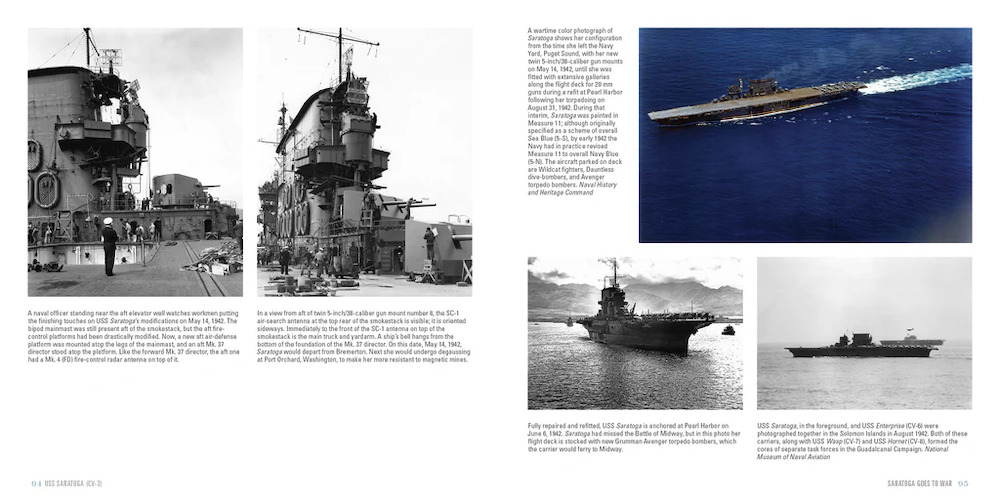
USS Saratoga and her sister ship USS Lexington were the two largest aircraft carriers in the world until 1944. The keel of the battle cruiser USS Saratoga (CC-3) was laid by New York Shipbuilding in Camden, New Jersey, on September 25, 1920. Work on the fast, formidably armed battle cruiser was suspended in February 1922, when the Washington Naval Conference negotiated limits on warship sizes and numbers. Once the accord was signed, the decision was made to covert the 28 percent complete Saratoga into an aircraft carrier (the same fate befell her sister ship, Lexington). Launched as an aircraft carrier on April 7, 1925, she became the largest ship of that type afloat. Saratoga’s revolutionary turboelectric drive and hull design allowed her to operate at 33 knots (either forward or backward), a trait believed to be useful in the event of combat damage to either end of her flight deck. And damaged she was. Though in port at San Diego, California, when the Japanese attacked Pearl Harbor, during the ensuing war the ship was damaged repeatedly, and sometimes severely. Despite this, she fought throughout the war, earning eight battle stars. Following the war, in view of her age, past damage, and the limitations of her design, Saratoga was deemed surplus and was expended as a target during the Bikini Atoll nuclear tests. She survived the first “Able” bomb test but was sunk by the “Baker” test on July 25, 1946. This 144-page volume, an expansion of the author’s earlier work, immerses the reader in the construction and operation of the ship at peace and war, as well as detailing the many refits and repairs she underwent, through over 350 photos and illustrations.


